

How Does Influenza A Begin and Spread?
Influenza A typically starts with sudden fatigue, fever, headache, and muscle aches that can worsen quickly within a short period. The virus spreads through close contact, airborne droplets, or by touching contaminated surfaces and then touching the face. If you notice early symptoms or worsening discomfort, consult Dr. Yulia Neyman at Carrboro Family Medicine Center for timely evaluation and appropriate care to prevent complications. For more information, please contact us or book an appointment online. We are conveniently located at 610 Jones Ferry Rd Suite 102, Carrboro, NC 27510.
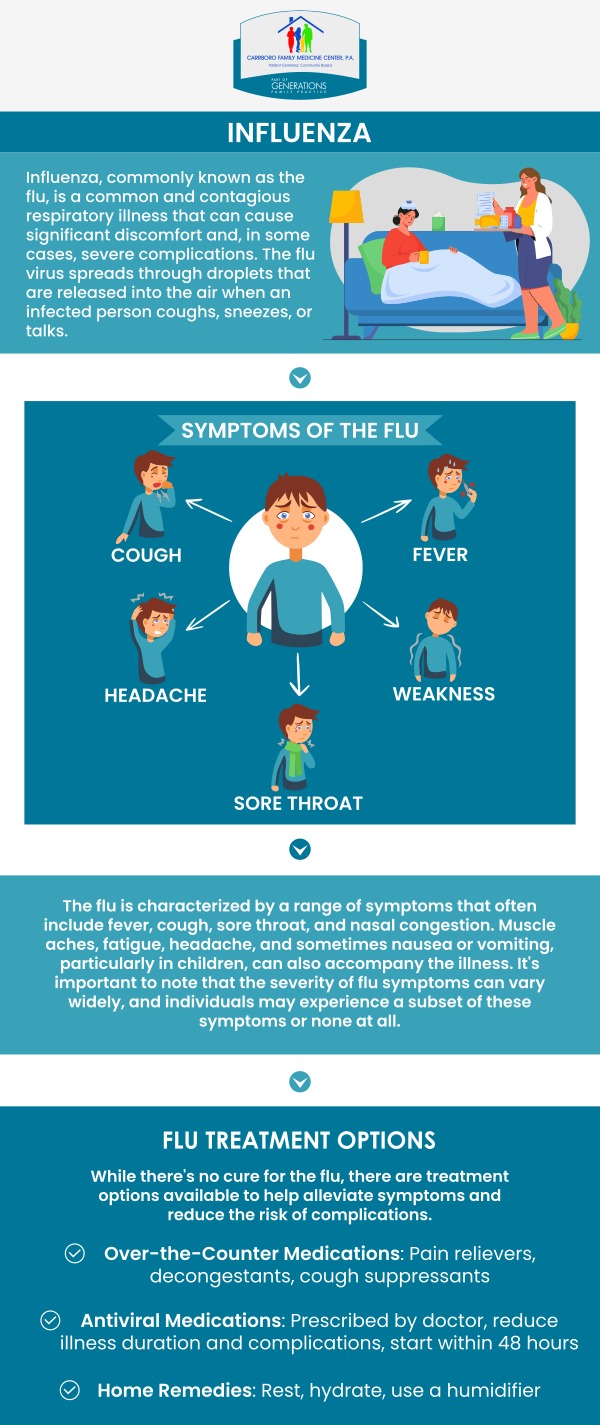
Table of Contents:
How is Influenza A transmitted from person to person?
How does the Influenza A virus enter the body?
What makes Influenza A more contagious than other flu strains?
How long after exposure to Influenza A do symptoms typically appear?
Understanding the Spread of Influenza A with Carrboro Family Medicine Center
Influenza A is mainly transmitted from person to person through respiratory droplets. These droplets are released into the air when someone who is infected coughs, sneezes, or talks, and can be inhaled by people nearby—usually within about six feet.
The virus can also spread when someone touches a surface or object that has the influenza virus on it and then touches their mouth, nose, or eyes. Since the virus can survive on hard surfaces for several hours, it’s important to regularly wash your hands and disinfect commonly touched surfaces, especially during flu season here in Carrboro.
Crowded or enclosed spaces, such as waiting rooms, schools, or public transportation, increase the risk of the virus spreading. Influenza A is highly contagious, particularly during the first three to four days after symptoms begin, but individuals can spread the virus even before symptoms appear and up to a week after becoming sick.
At Carrboro Family Medicine Center, we encourage our patients to practice good hand hygiene, cover coughs and sneezes, and stay home when feeling unwell.
Influenza A primarily enters the body through the respiratory tract. Most commonly, infection begins when a person breathes in tiny droplets containing the virus. These droplets are released into the air when someone who is infected coughs, sneezes, or even talks. Once inhaled, the virus comes into contact with the mucous membranes lining your nose, throat, or occasionally the eyes.
On the surface of the Influenza A virus are proteins called hemagglutinin. These proteins allow the virus to attach to cells lining your respiratory tract. Once attached, the virus is absorbed into the cell, where it releases its genetic material and begins to multiply.
While most flu cases are spread through the air, it’s also possible to catch the flu by touching a surface contaminated with the virus and then touching your mouth, nose, or eyes. That’s why we encourage all our patients to practice good hand hygiene and avoid touching their faces.
Understanding how Influenza A spreads can help you take practical steps to stay healthy.
Influenza A is generally more contagious than other types of flu, and understanding why can help you and your family take effective precautions.
One major reason Influenza A spreads so easily is its ability to change rapidly. Through processes known as antigenic drift and antigenic shift, the virus frequently alters its surface proteins. This means even if you’ve had the flu or a flu shot in the past, you may still be susceptible to new strains. Antigenic shift, in particular, can lead to the sudden emergence of entirely new subtypes, increasing the risk of larger outbreaks or even pandemics.
Unlike some other flu viruses, Influenza A can also infect animals like birds and pigs. When these animal strains mix with human strains, new variants can develop—sometimes making the virus even more contagious.
Influenza A typically multiplies quickly in the upper respiratory tract, making it easy to spread through coughing, sneezing, or even talking. This is why we emphasize the importance of good hygiene, annual flu vaccines, and staying home when you’re ill.
At Carrboro Family Medicine Center, we want our patients to be informed about Influenza A and how it spreads. After someone is exposed to Influenza A, symptoms typically begin to appear within one to four days—most people start to feel sick about two days after exposure. This time frame is called the incubation period. Even before symptoms begin, the virus is multiplying in the body, and it is possible to spread the flu to others.
Early symptoms our providers commonly see include the sudden onset of fever, chills, cough, sore throat, body aches, and fatigue. However, the timing and severity of symptoms can vary based on age, immune status, and the specific flu strain.
If you start to notice symptoms of the flu, we encourage you to contact Carrboro Family Medicine Center as soon as possible. Early treatment can help reduce the severity of your illness and prevent complications. Our team is here to provide guidance, testing, and care to help you recover and protect those around you.
Understanding how Influenza A (the flu) spreads is essential for protecting yourself and your family—especially during flu season here in Carrboro and the surrounding communities. At Carrboro Family Medicine Center, Dr. Yulia Neyman is dedicated to ensuring our patients have the knowledge and resources they need to stay healthy.
How Is Influenza A Transmitted?
Influenza A is a type of flu virus that primarily spreads through respiratory droplets. This makes close contact with someone who is sick a significant risk factor, especially in households, workplaces, or schools here in our community. The virus can also survive for a short time on surfaces like doorknobs, phones, and countertops. Touching a contaminated surface and then touching your mouth, nose, or eyes can introduce the virus into your body.
When Are People Most Contagious?
People infected with Influenza A can spread the virus starting about a day before they show symptoms and remain contagious for up to a week after becoming ill. Children and those with weakened immune systems may be able to spread the virus for even longer. This means it’s possible to pass the flu to others before you even realize you’re sick.
How Can You Protect Yourself and Others?
At Carrboro Family Medicine Center, Dr. Yulia Neyman strongly recommend the following preventive steps:
• Wash your hands frequently with soap and water, especially after being in public places or touching shared surfaces.
• Avoid close contact with anyone who is sick whenever possible.
• Cover your mouth and nose when coughing or sneezing to prevent spreading germs to others.
• Clean and disinfect commonly touched surfaces in your home and workplace.
• Get your annual flu vaccine. The flu shot is a safe and effective way to reduce your risk of infection and can also lessen the severity of symptoms if you do get sick.
We’re Here for You
Dr. Yulia Neyman at Carrboro Family Medicine Center is here to answer your questions about the flu, provide guidance on preventive measures, and offer flu vaccinations for you and your family. For more information, please contact us or book an appointment online. We are conveniently located at 610 Jones Ferry Rd Suite 102, Carrboro, NC 27510. We serve patients from Carrboro NC, Chapel Hill NC, Southern Village NC, Fearrington NC, Blands NC, Pittsboro NC, and surrounding areas.
Check Out Our 5 Star Reviews



Additional Services You May Need
▸ Annual Physical Exam
▸ Primary Care
▸ Hypertension Management
▸ Chronic Diseases
▸ Diabetes Management
▸ Immunizations
▸ Lab Testing
▸ Sports Physicals
▸ STD Testing
▸ Allergy Treatment
▸ Acute Illness



 Send Text
 How May I Help You?