
How the Flu Affects Adults: Common and Uncommon Symptoms
At Carrboro Family Medicine Center, we help adults recognize both common and uncommon symptoms of the flu. Typical signs include fever, body aches, fatigue, and congestion, while less common symptoms may include gastrointestinal issues or confusion in older adults. Understanding these symptoms can help you seek timely care and prevent complications. To consult our professionals, please contact us or book an appointment online. We are conveniently located at 610 Jones Ferry Rd Suite 102, Carrboro, NC 27510.
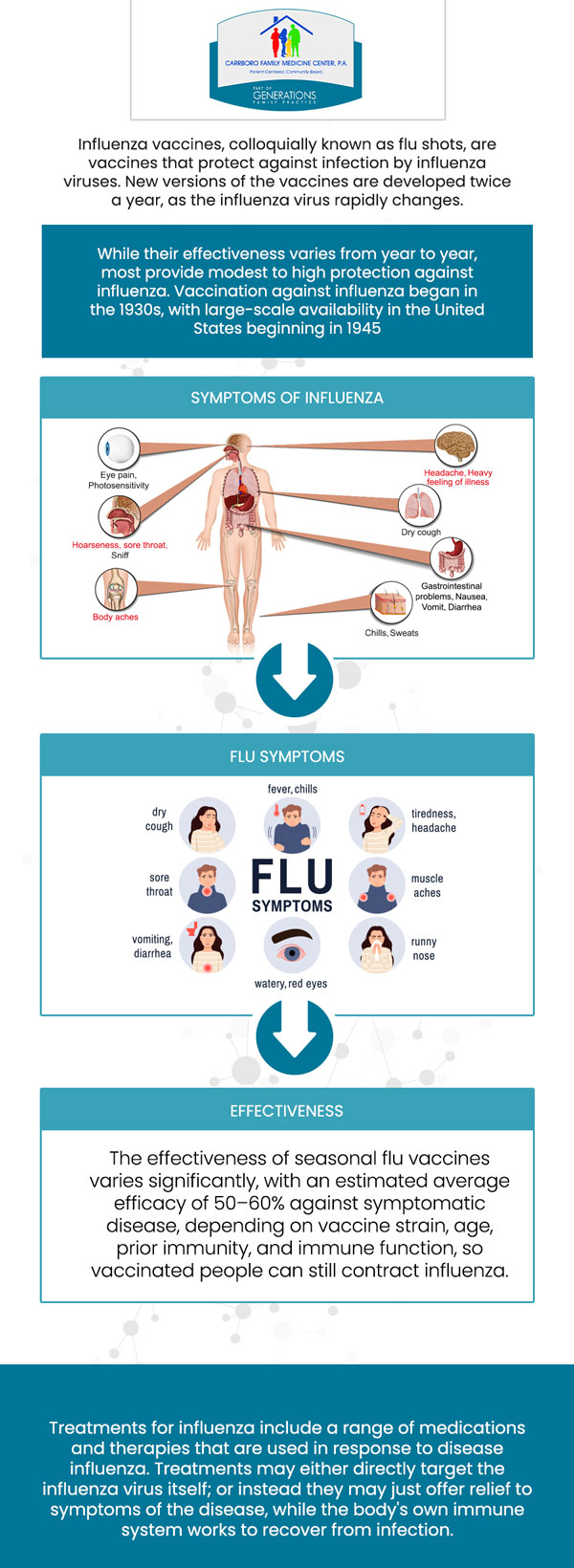
Table of Contents:
What are the most common flu symptoms in adults?
How do flu symptoms differ from the common cold in adults?
What are some less common symptoms of the flu in adults?
Can flu symptoms be mild in adults?
Can the flu cause gastrointestinal issues in adults?
How can Carrboro Family Medicine Center help with flu symptoms in adults?
The flu (influenza) typically causes a sudden onset of symptoms that can range from moderate to severe. In adults, the most common flu symptoms include:
• Fever or feeling feverish/chills
• Cough (usually dry and persistent)
• Sore throat
• Runny or stuffy nose
• Muscle or body aches
• Headache
• Fatigue or weakness
Many adults also report feeling unusually tired or having a lack of energy early in the illness. These symptoms often come on quickly and can make even simple daily tasks feel hard to manage.
While both the flu and the common cold are respiratory illnesses, they’re caused by different viruses and tend to produce different symptom patterns.
With a common cold, symptoms usually develop gradually and are generally milder. Typical cold symptoms include:
• Runny or stuffy nose
• Sneezing
• Sore throat
• Mild cough
By contrast, the flu tends to start abruptly and involves more intense symptoms such as:
• Sudden fever and chills
• Significant fatigue or weakness
• Muscle aches
• Headache
Cold symptoms rarely include high fever, extreme exhaustion, or widespread body aches that are more characteristic of the flu. If you suddenly feel very ill with fever and body aches, it’s more likely the flu than a common cold.
In addition to the common symptoms above, adults with the flu may experience less typical but still noteworthy signs, such as:
• Sinus pain or pressure
• Chest discomfort
• Worsening of chronic conditions (e.g., asthma or COPD flare‑ups)
• Confusion or dizziness (especially in older adults)
• Extreme fatigue beyond what’s typical
These less common symptoms can sometimes appear as the illness progresses or when the body’s immune response is particularly strong.
Yes — flu symptoms can be mild in some adults, especially those who are healthy and have strong immune systems. Not everyone with the flu develops a high fever or severe illness. Some adults may only experience:
Mild fatigue
A low‑grade fever
Slight cough
Congestion
Even mild flu can still make you feel unwell and contagious, so it’s important to rest, monitor symptoms, and practice good hygiene to prevent spreading the virus to others.
However, mild cases can sometimes worsen suddenly, so it’s important to watch for any signs of complications, such as shortness of breath or persistent fever.
Yes—while respiratory symptoms are the hallmark of influenza, some adults may experience gastrointestinal symptoms, though this is more common in children. These can include:
• Nausea
• Vomiting
• Diarrhea
• Abdominal discomfort
These symptoms don’t occur in all cases of the flu, and when they do, they’re usually milder than the respiratory symptoms. However, they can contribute to dehydration and weakness, especially if appetite is reduced.
If gastrointestinal issues become severe or persist, medical evaluation is recommended to rule out dehydration and other complications.
At Carrboro Family Medicine Center, we focus on providing comprehensive, evidence‑based care to adults experiencing flu symptoms. When you come in with symptoms, our providers will:
• Perform a thorough evaluation: We assess your symptoms, medical history, and risk factors to distinguish influenza from other illnesses and identify whether testing or treatment is needed.
• Provide flu testing when appropriate: Rapid flu tests and clinical assessments help confirm a diagnosis so that we can tailor your care.
• Offer personalized treatment plans: Depending on your symptoms and health status, treatment may include the following:
Symptom relief strategies (rest, hydration, fever reducers)
Prescription antiviral medications if started early
Guidance on when to monitor at home versus seek urgent care
• Support high‑risk patients closely: Adults with chronic health conditions, weakened immune systems, or those over age 65 may be at higher risk of complications. We provide careful monitoring and proactive care in these situations.
• Educate on prevention and self‑care: We help you understand how to care for yourself while recovering, how to reduce the spread to family and colleagues, and when it’s safe to return to daily activities.
• Emphasize ongoing support: Follow‑up guidance ensures your recovery stays on track, and we’re available to answer questions about lingering symptoms or concerns.
To consult our professionals, please contact us or book an appointment online. We are conveniently located at 610 Jones Ferry Rd Suite 102, Carrboro, NC 27510. We serve patients from Carrboro NC, Chapel Hill NC, Southern Village NC, Fearrington NC, Blands NC, Pittsboro NC, and surrounding areas.
Check Out Our 5 Star Reviews



Additional Services You May Need
▸ Annual Physical Exam
▸ Primary Care
▸ Hypertension Management
▸ Chronic Diseases
▸ Diabetes Management
▸ Immunizations
▸ Lab Testing
▸ Sports Physicals
▸ STD Testing
▸ Allergy Treatment
▸ Acute Illness



 Send Text
 How May I Help You?